Karolina Sedlackova
Koláče (Czech: KOH-lah-cheh; singular: koláč) are round, yeasted sweet pastries topped with sweet fillings — most classically quark cheese (tvaroh), poppy seed (mák), plum jam (povidla), or apricot — and finished with streusel. They are the Czech Republic’s national pastry, dating from at least the 14th century, and were carried by Czech emigrants to Texas in the 1850s, where they evolved into the American “kolaches” now famous in Texas Czech towns like West.
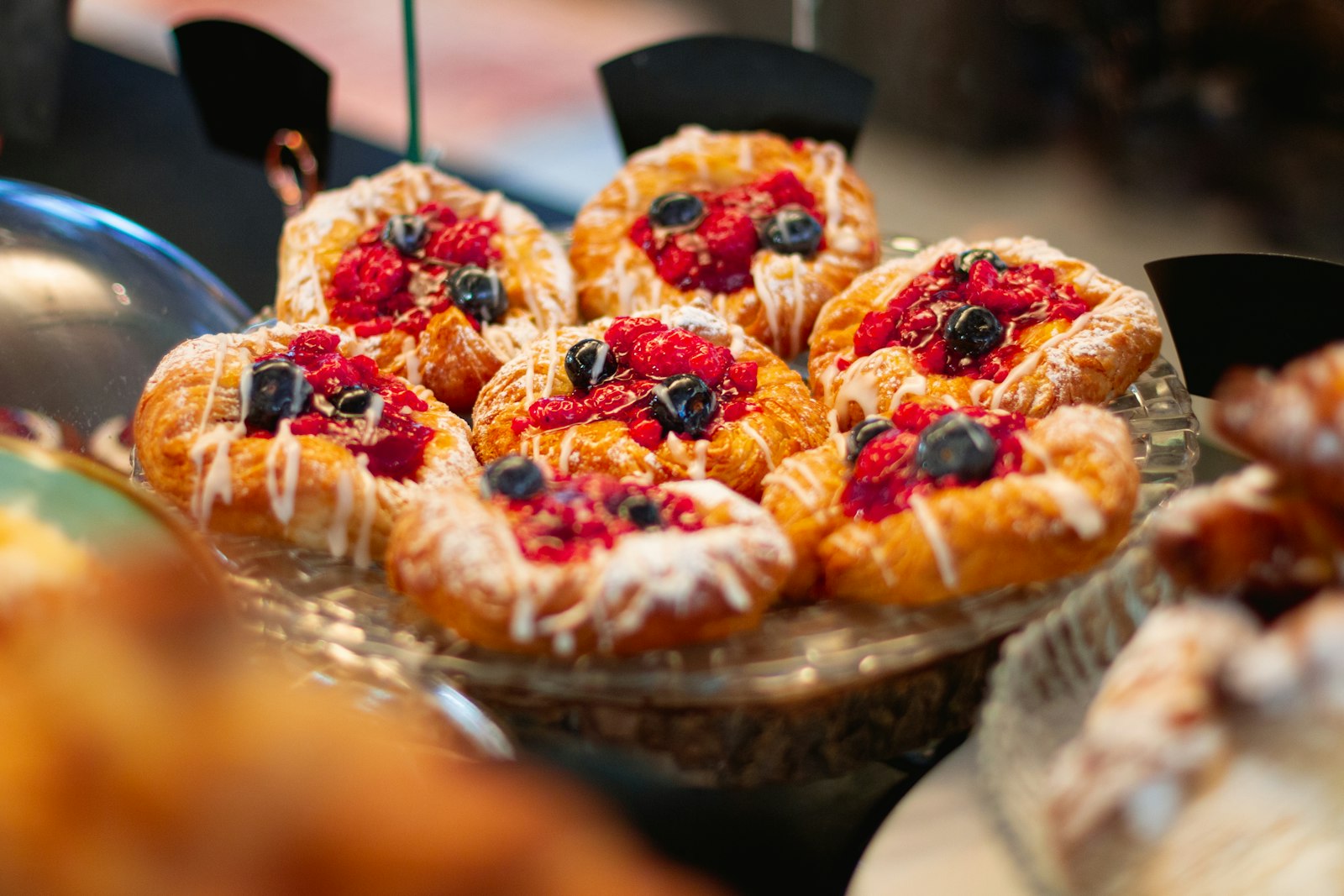
What defines a real Czech koláč
| Feature | Traditional Czech | Texan “kolache” |
|---|---|---|
| Shape | Round, ~8 cm, open-top with a well | Round or square; also enclosed (klobasnek) |
| Dough | Yeasted, rich with butter, egg yolks, milk | Similar; sometimes sweeter |
| Classic filling | Poppy seed, quark, plum jam | Sausage-and-cheese (klobasnek), cream cheese, fruit |
| Streusel top | Almost always (drobenka) | Sometimes |
| Sweetness | Restrained; the filling carries flavour | Sweeter, more American-style |
The four classic fillings
1. Poppy seed (makový koláč)
Ground poppy seeds cooked with milk, sugar, honey, and lemon zest. The most traditional and most divisive filling — some Czech families make it exclusively at Christmas and Easter.
2. Quark cheese (tvarohový koláč)
Fresh tvaroh (a fresh curd cheese similar to fromage blanc or dry ricotta) mixed with egg yolk, sugar, and vanilla. The most universally loved variation.
3. Plum jam (povidlový koláč)
Thick, slow-cooked plum butter (povidla) — spiced with cinnamon and clove. Autumn’s classic. The regional favourite in Moravia.
4. Apricot / cherry (meruňkový / višňový)
Summer fillings using whole small fruits or thick jam. Common in Bohemia’s fruit-growing regions.
Where the Texas kolache came from
Czech immigrants — mostly from Moravia — settled central Texas in the 1850s–1900s, founding towns like West, Ennis, and Fayetteville. They brought their kolač-making traditions and adapted them to Texas ingredients. Two major evolutions occurred:
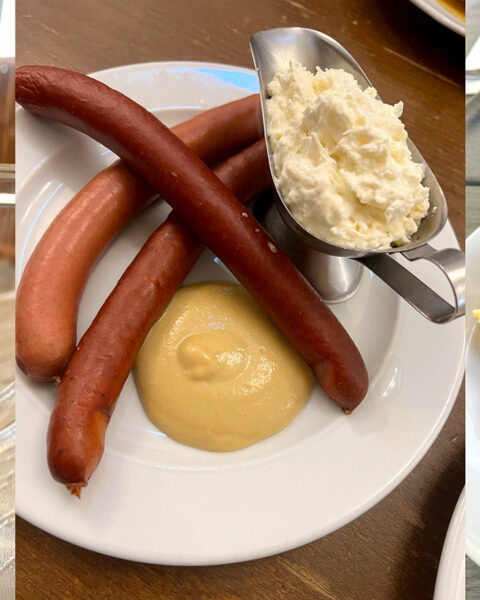
- Klobasnek — a Texas invention wrapping sausage (Czech-style klobása) inside kolache dough. Not traditional in the Czech Republic at all.
- Sweeter, denser dough — American palate adjusted the recipe over generations.
The town of West, Texas holds the “Westfest” annual kolache festival each Labor Day weekend — the largest Czech-American cultural event in the U.S.
Wedding kolaches
Kolaches have a formal wedding role in traditional Moravian culture: miniature kolaches (svatební koláčky, ~4 cm across) are baked in the hundreds and distributed to guests as symbols of prosperity and abundance. Recipes are passed down through female relatives; the bride’s family often bakes for a week beforehand.
How to eat a koláč
With coffee, mid-morning. Kolaches are never eaten as dessert after a meal in traditional Czech culture — they are a mid-morning or afternoon coffee-companion. Larger, thicker “koláč” versions can be dessert; the small svatební koláček is snack-sized.
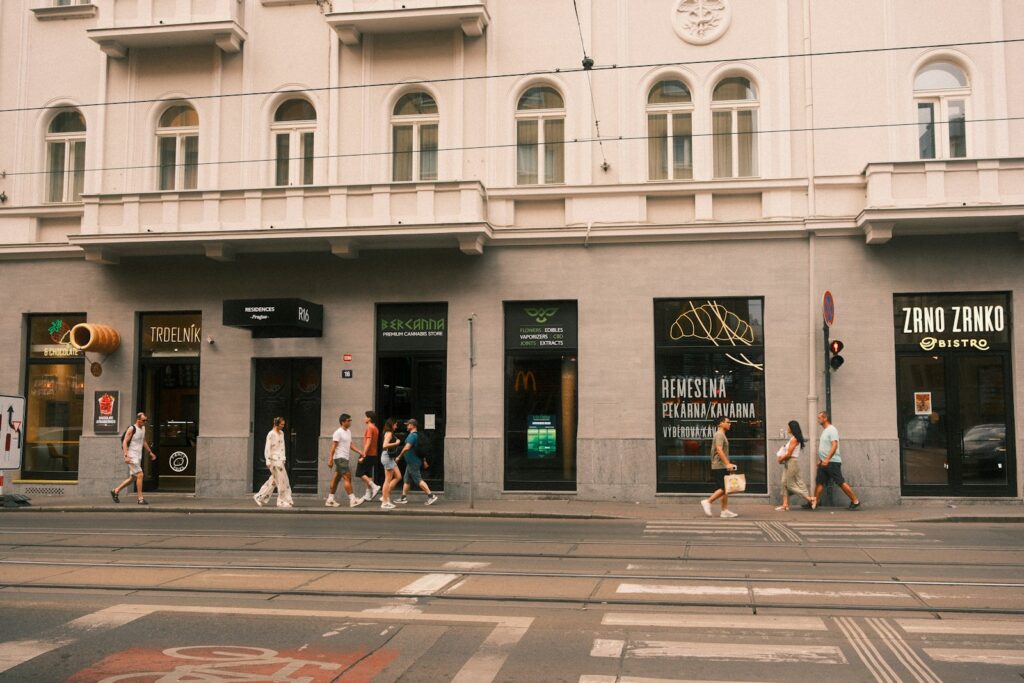
Where to buy the best in Prague
- Antonínovo pekařství — several locations; traditional and highly regarded.
- Praktika café-bakery — modern take, excellent quark koláč.
- Kavárna Práh — old-school; poppy-seed specialists.
- Any small-town bakery outside Prague — often better than the capital.
Frequently asked questions
How do you pronounce “kolache”?
Singular: KOH-lahch. Plural (koláče): KOH-lah-cheh. Texans sometimes anglicise it to “koh-LAH-chee”.
Is kolache a dessert?
Not traditionally. It’s a coffee pastry — eaten mid-morning or afternoon with coffee, or as a wedding treat. Only the larger “koláč” served with cream can double as dessert.
What’s the difference between koláč and buchta?
Koláč is round with an open top and visible filling; buchta is a rectangular yeasted bun with the filling fully enclosed. Both use similar dough.
Are Czech kolaches vegan?
Traditional recipes use butter, eggs, and milk — not vegan. Modern vegan versions exist but are rare in traditional bakeries.
Can I make them at home?
Yes — the dough is simple yeasted enriched bread dough. The two challenges: making a proper poppy-seed filling (buy pre-ground seeds), and getting the streusel butter cold enough. See “Recipes from an Old Town Bohemian Kitchen” for a tested recipe.
Baking supplies for kolaches
- “Recipes from an Old Town Bohemian Kitchen”
- Escali Primo digital kitchen scale
- Ground poppy seeds — essential for authentic filling.
- Silicone baking mats
- Grade-A vanilla beans